

Everything You Believe About Reality Is Borrowed
Harari Told You the Truth and You Called It Interesting.

Your identity, your money, your country.
None of it exists the way you think it does.
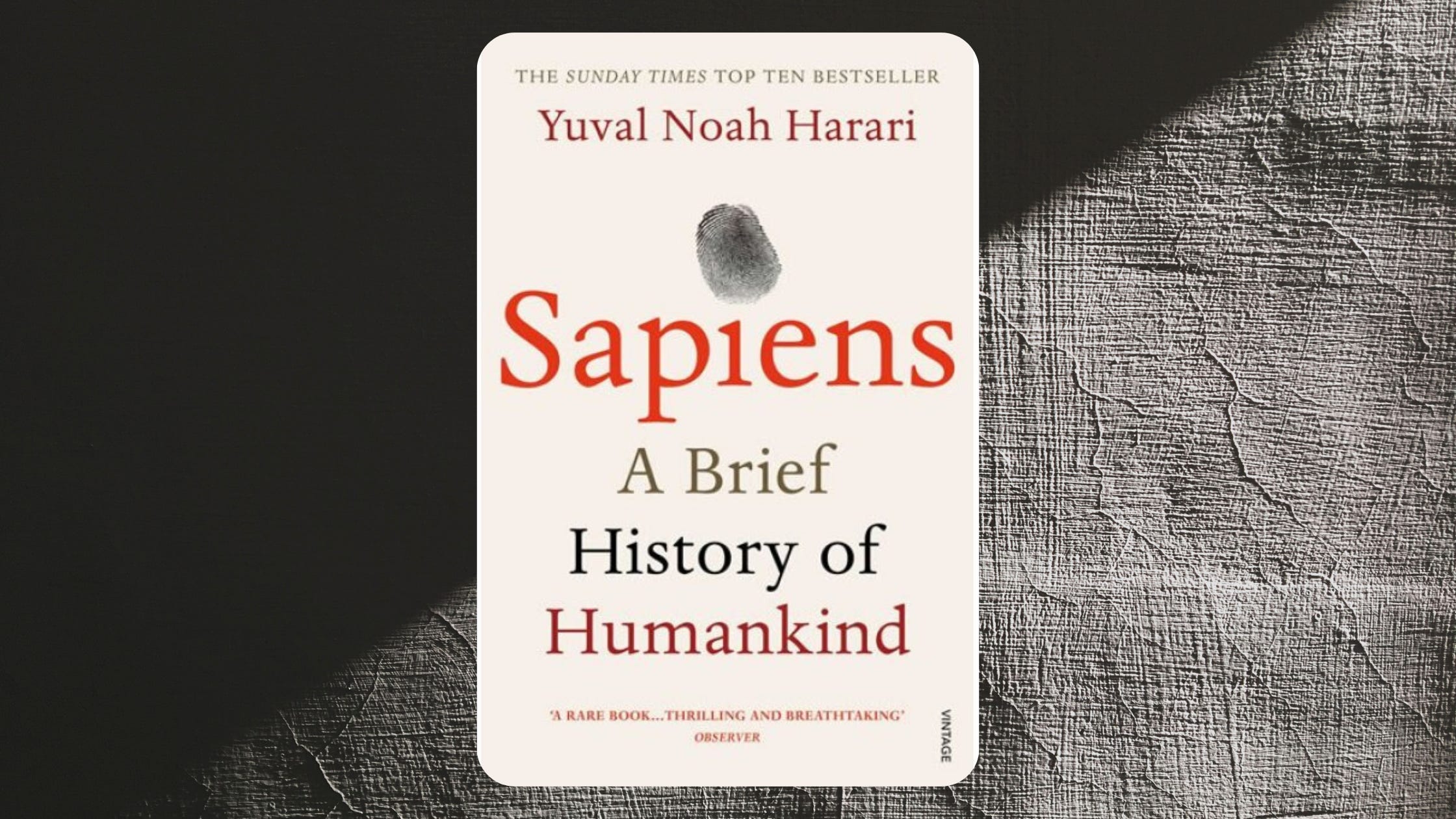
You read Sapiens.
You nodded along.
You told your friends about the cognitive revolution, about shared myths, about how money and nations and human rights are fictions we invented.
You found it fascinating.
Then you went back to your life as if nothing had changed.
This is the strange thing about truth. We can hear it, acknowledge it, even agree with it, and still live as though we never encountered it at all.
Harari told you that everything you believe about reality is a story.
Not a lie, but not exactly true either. A collective agreement. A narrative we maintain together because it serves us, because it holds civilization together, because without these shared fictions, we would have no way to cooperate at scale.
You found this idea interesting. You did not find it devastating.
And that is the problem.
The comfortable revelation
When Harari explains that money has no inherent value, that it works only because we all believe it works, you understand immediately. You see the logic. You recognize the truth of it. And then you go to the store and buy groceries with money, never once feeling the vertigo of participating in a mass hallucination.
When he tells you that nations are imagined communities, that borders are invisible lines we pretend are real, that flags are pieces of cloth we have agreed to die for, you nod. You get it. And then you feel pride when your national anthem plays, anger when someone disrespects your country, loyalty to a piece of geography that exists primarily in your mind.
When he shows you that human rights are not natural laws written into the universe, but ideas we invented and chose to honor, you see his point. You accept it. And then you invoke those rights as if they were carved into the fabric of existence itself, as if they were discovered rather than created.
The revelation does not disturb you because you have learned to hold truth at a distance. You have learned to find ideas interesting without letting them touch the way you live.
What borrowed means
Everything you believe about reality is borrowed.
This is not a metaphor. This is a description.
You did not invent the language you think in. You inherited it. The words you use to understand the world were given to you by others who received them from others before them. Your thoughts are constructed from materials you did not create.
You did not choose most of your beliefs. You absorbed them. From your parents, your teachers, your culture, your time and place in history.
You believe what you believe largely because of where and when you were born. Had you been born elsewhere, elsewhen, you would believe different things with the same conviction.
Your sense of what is normal, what is right, what is possible, what is real, all of this came from outside you.
You borrowed it. You borrowed it so early and so completely that you forgot it was borrowed. You began to experience it as your own, as obvious, as simply the way things are.
This is what Harari showed you.
Not that your beliefs are wrong, but that they are contingent. Not that your values are false, but that they are constructed. Not that your reality is an illusion, but that it is a choice we made together and continue to make every day.
The weight of understanding
If you truly absorbed what Harari wrote, you would not be the same person.
You would walk through the world differently. Every institution you encounter, every social norm you follow, every belief you hold would appear to you in a new light. Not as given, but as chosen. Not as eternal, but as temporary. Not as discovered, but as invented.
You would see the invisible architecture that holds society together. You would recognize that you are participating in elaborate games of pretend, that everyone around you is also pretending, and that the games only work because we all agree not to acknowledge that we are pretending.
This knowledge should be unbearable. It should make ordinary life feel strange. It should create a distance between you and your own beliefs, a gap through which you could see both the necessity of the fictions and their profound fragility.
But it does not.
You read the book. You understood the argument. You agreed with the analysis.
And then you returned to living inside the fictions as if you had never seen through them at all.
Why do we protect ourselves?
There is a reason you found Harari interesting rather than shattering.
You need the fictions to remain intact.
We all do.
You cannot function in society while simultaneously holding the knowledge that society is a collective performance. You cannot believe in money while truly grasping that money is worthless. You cannot fight for justice while fully accepting that justice is something we made up.
The borrowed beliefs must feel real for them to work.
The moment you see them as borrowed, as constructed, as maintained through a collective agreement, they begin to lose their power over you. And if they lose their power over you, you lose your ability to participate fully in the world they create.
So you protect yourself. You let the truth remain abstract. You keep it at the level of intellectual interest. You admire the insight without applying it. You praise the book without letting it change you.
This is not a weakness. This is survival.
We cannot live in constant awareness of the contingency of everything we believe. We would be paralyzed. We would be alone. We would have no ground to stand on.
The ones who cannot go back
But some people read Harari and do not recover.
They see through the fictions and cannot unsee. They walk through the world aware that everything is performance, that all meaning is assigned rather than inherent, that the emperor has no clothes and never did and everyone knows it but agrees to pretend otherwise.
These people struggle. They feel displaced. They stand slightly outside every situation they are in, watching themselves and others play roles in scripts no one wrote down. They feel the absurdity of caring about things that are obviously arbitrary. They lose their innocence about belief itself.
They envy you. They envy your ability to find the truth interesting without being destroyed by it. They wish they could return to living inside the story, to experiencing the borrowed beliefs as real, to feeling at home in the world again.
But they cannot.
Once you truly see that everything is borrowed, that all of reality as we experience it is constructed, that there is nothing beneath the stories except more stories, you cannot return to innocence.
You can only choose what to do with the knowledge.
What remains
So what do you do when you know that everything you believe is borrowed? When you see that your reality is maintained through collective agreement? When you understand that meaning is not discovered but created?
You have three options.
The first is to reject the fictions entirely. To refuse to participate in the games, to stand outside society, to live according to no borrowed beliefs.
This path leads to isolation.
You cannot build anything alone. You cannot love, work, create, or survive without entering into shared agreements with others. The price of complete independence from borrowed beliefs is complete disconnection from the human community.
The second is to forget what you learned. To push the knowledge back down, to let the fictions close over you again, to return to experiencing them as real.
Some people can do this.
They read Harari, have the revelation, and then slowly, day by day, let it fade. They go back to living as if belief were simple, as if reality were solid, as if the stories were true. This is not dishonesty. This is mercy.
The mind protects itself from truths it cannot use.
The third is to live consciously inside the fictions. To participate in the borrowed beliefs while knowing they are borrowed. To use money while seeing it as an agreement. To honor values while recognizing them as constructed. To build meaning while accepting that meaning is something we create rather than find.
This third path is the hardest.
It requires you to hold two truths at once.
The beliefs are fictions. The beliefs are necessary. They are not real. They are all we have. They are invented. They are worth defending.
The test
Here is how you know whether you truly understood Harari or just found him interesting.
Do you still argue about politics as if your position is obviously correct? Do you still feel wounded when someone criticizes your country? Do you still experience your beliefs as natural rather than cultural? Do you still treat your values as universal rather than particular? Do you still see yourself as right and others as wrong, or do you now see yourself as someone who has simply chosen a different narrative?
If yes, then you did not absorb the lesson.
You appreciated the insight. You enjoyed the perspective. But you did not let it change the way you see. You kept it as information rather than a transformation.
And perhaps that is fine. Perhaps we are not meant to live in full awareness of the borrowed nature of reality. Perhaps the fictions work better when we half-forget they are fictions. Perhaps the truth is useful as an idea but unbearable as a constant experience.
But you should at least know what you did.
You encountered a truth that could have shattered your sense of reality. You called it interesting. You turned the page. You went on believing as if nothing had happened.
Harari told you the truth.
You thanked him for the pleasant read. And that tells you something about how desperately we need our borrowed beliefs to feel real.
The question is not whether everything you believe is borrowed.
The question is whether you can live knowing it is.
As you said, some people move on, appreciating the perspective; others are changed forever. We all resonate with different content in different ways and at different paces and points in time. Harari truly reaches many people by highlighting identities dominated by cultural and ethical norms. You have addressed this topic exceptionally well in your piece. The book is a great example and a real masterpiece. I still reread it occasionally. Thank you for sharing.
I resonate with this, and I wish I didn't. I read Harari, questioned everything, and now I just want to be blessed with ignorance. I appreciate that you acknowledged the struggle of being in society after reading Harari, and unpacked the possible attitudes to take moving forward. This was a good read.